Vegetarian Catering for Yoga Retreats in the Atlas Mountains
A four-day plant-based feast at the Kasbah du Toubkal
We didn’t hesitate when Mike McHugo from the Kasbah du Toubkal asked us if we could provide vegetarian catering for yoga retreats in the Atlas Mountains, as it’s such a heavenly place to work.
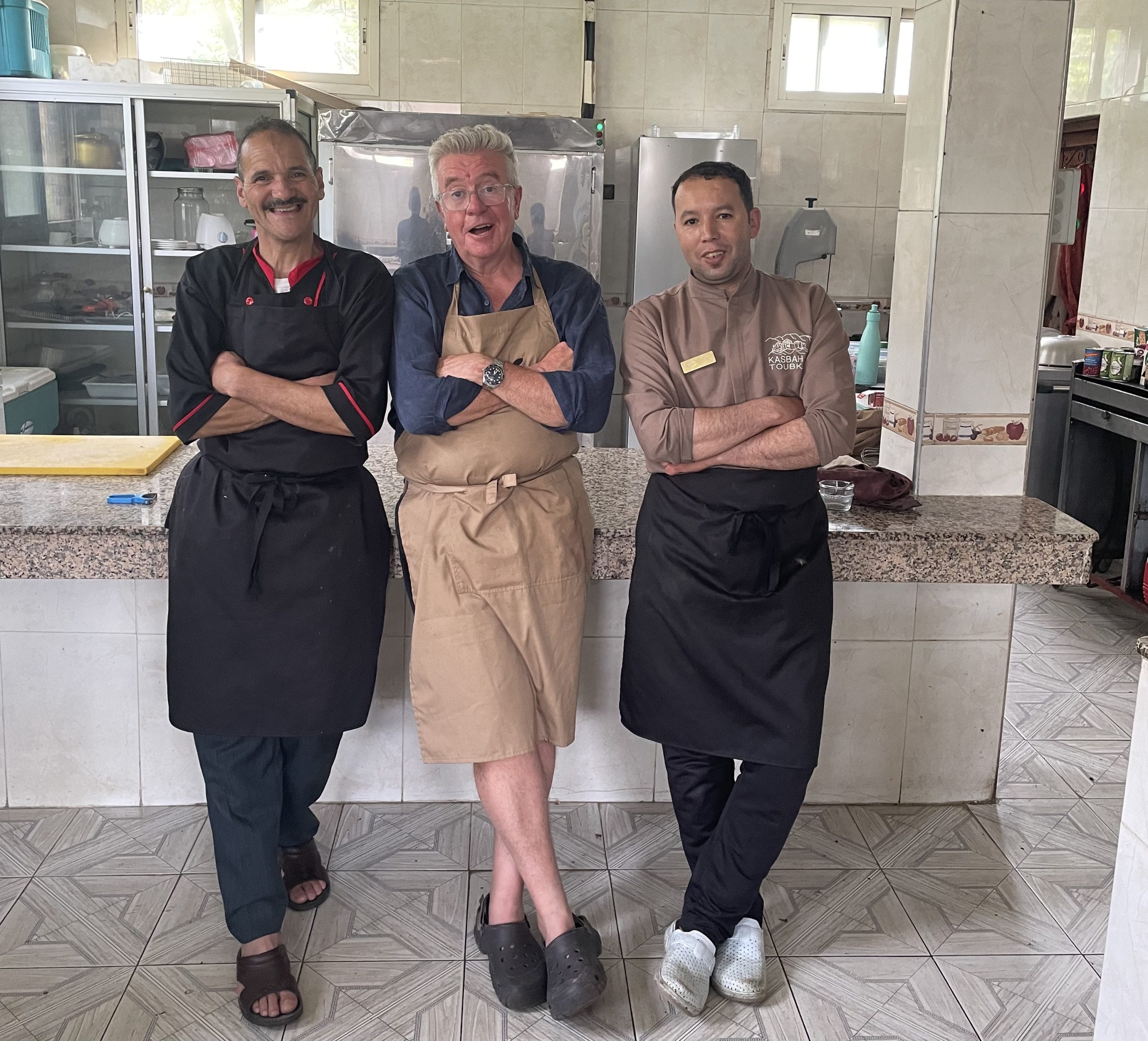
The Kasbah’s team of Moroccan chefs cook delicious traditional meals for guests. But when it comes to preparing nourishing, plant-based food for yoga groups, they wanted inspiration—to help them make their cooking more exciting and satisfying for their vegetarians and vegan guests.
Why Vegetarian Catering Works So Well for Yoga Retreats
Of course, providing vegetarian catering for yoga groups makes complete sense. It fits naturally with yogic philosophy, which often calls for avoiding meat and stimulants.
Meat dishes can be too rich for a retreat focused on lightness and mental clarity. By contrast, a well-designed vegetarian menu—especially when it’s fresh, whole, and carefully sourced—supports balance, calm and energy. Many yoga retreats are seen as a reset for the body and mind, and light, colourful meals help that process: aiding digestion, reducing bloating, and leaving guests feeling vibrant rather than sluggish.
Planning a Four-Day Plant-Based Menu
Mike’s brief was simple but ambitious: two three-course vegetarian meals a day for four days—that’s 24 different dishes. We knew that every dish needed to be nourishing, varied, and above all, delicious.
Vegetarian food should be vibrant and satisfying by nature—but surprisingly often, meals here in Morocco can be repetitive, overcooked or bland. We set out to create something different.
Our menu planning focused on:
- Generous use of olive oil, nuts, seeds, grains and pulses
- Local, seasonal vegetables and fruits
- Plenty of texture, colour and contrast
Local Inspiration: Walnuts, Cherries and Mountain Views
The Kasbah du Toubkal sits at the top of the Imlil valley, just below Mount Toubkal—North Africa’s highest peak at 4,000m. The green valley was bursting with life when we arrived: trees covered in little green walnuts, and cherry trees heavy with deep red fruit.
We were lucky. The cherries were perfectly ripe—some of the sweetest and juiciest we’ve ever tasted. And there were still bags of walnuts from the autumn crop available in the village. Both of these ingredients ended up inspiring several of the dishes we cooked.
A Few Highlights from the Menu
Day 1 Starter: Muhammara & Baba Ghanoush
We roasted the local walnuts and blended them with roasted red pepper and plenty of olive oil to make the traditional Syrian dish of muhammara. It paired beautifully with smoky baba ghanoush made from roasted aubergine, tahini and lemon (and even more olive oil!). We served the dips with raw veg sticks and used yesterday’s bread, fried in olive oil and sprinkled with Palestinian za’atar.
Day 2 Lunch: Nut Koftes, Cucumber Raita & Courgette Salad This dish was all about contrast. The nut koftes (again with those incredible walnuts) were oven-baked and satisfying to bite into. The cucumber raita, made with roasted cumin seeds, added coolness. And the griddled courgette salad, dressed with soy sauce and sesame oil, brought a subtle Asian twist.
Day 3 Dinner: Chana Masala, Bulgur Salad & Carrot Slaw
A healthy, grounding combination of pulses, wholegrains and veg. The Indian chickpea braise (chana masala) was gently spiced and served with homemade yoghurt. The bulgur salad was packed with finely diced courgettes, peppers and seeds, all tied together with a pomegranate molasses dressing. The carrot salad was grated and simply dressed with olive oil, lemon and a few raisins for sweetness.
Day 4 Dessert: Meringues, Cherries & Amlou Yoghurt
We wanted to make the cherries the star of at least one dish. This dessert was our Moroccan take on the English Eton Mess: cherries stoned and halved, served with our homemade meringues and a tangy yoghurt-amlou sauce. Amlou—a local mixture of ground almonds and argan oil—is a favourite of ours and featured often during the retreat.
Mules, Improvisation & a Bit of Smoke
One of the quirks of location catering for yoga retreats in remote places like Imlil is that you have to be inventive. The Kasbah is only accessible on foot or by mule, so all our ingredients, kit, and utensils had to be carefully packed onto a mule and hauled up the mountain.
We cooked in an unfamiliar kitchen, with a team that spoke a little English and some French. The gas burners weren’t quite what we were used to. Our oat cookies got a bit too dark (OK, burnt). But it was fun. We improvised. We smiled a lot. And we were all proud of what we served as a team.
Sharing Techniques with the Local Team
We wanted to make sure we left the Kasbah chefs inspired by the experience of cooking with us. We worked closely with the Kasbah’s chefs, sharing techniques, explaining ingredients, thus ensuring that our recipes could be recreated long after we’d left. It wasn’t just a one-off event—it was a collaboration and investment for future yoga retreats.
A Final Word on the Setting
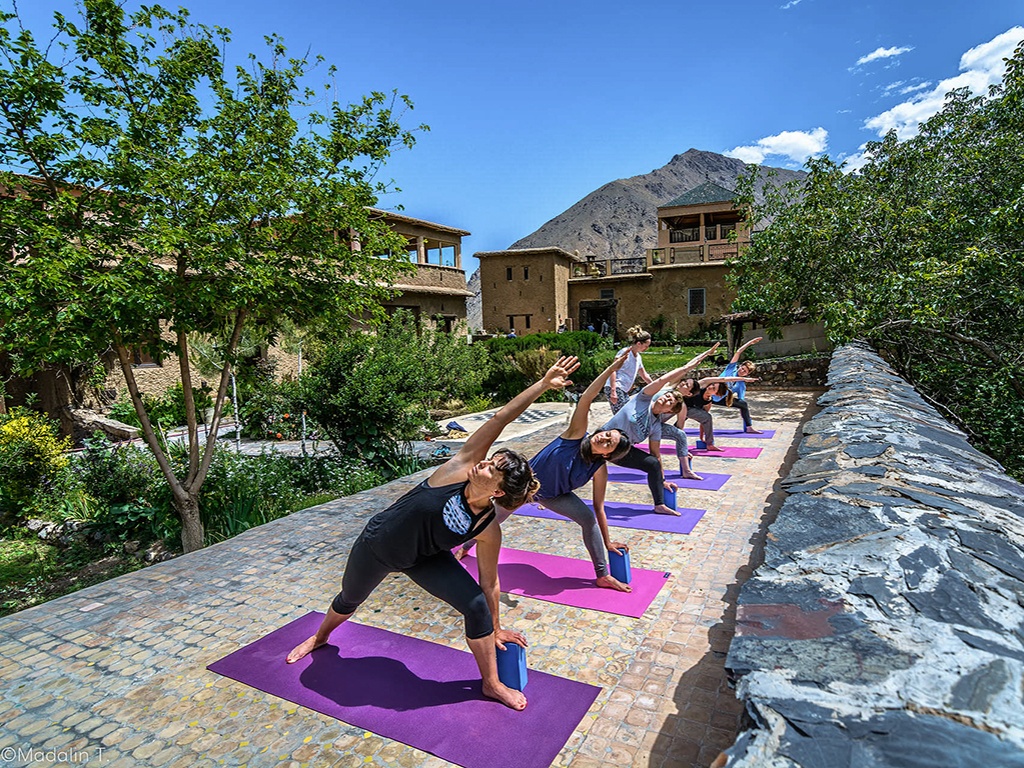
The Kasbah is a spectacular place to cook. Every doorway and terrace offers an astonishing view of the Atlas Mountains. The energy, the peace, the setting—it all feeds into the food. It was a privilege to be there.
Interested in Vegetarian Catering for Your Retreat?
At Field Kitchen we specialise in vegetarian and plant-based catering for yoga retreats all over Morocco. From mountain villages to Medina riads to desert camps, we bring fresh, energising food to wherever your practice takes you.
Contact us to learn more or book your retreat catering.